
A white rat in an intracranial self-stimulation apparatus, pressing against the lever in the chamber

The Lever and the Enter Key: A Conceptualization of Agent-Mediated Software Development as a Functional Analog of Brain Stimulation Reward

This essay is also available as a preprint on PsyArXiv. To cite it, use the following reference (APA 6th edition): White, R. D. (n.d.). The lever and the enter key: A conceptualization of agent-mediated software development as a functional analog of brain stimulation reward. Retrieved from https://osf.io/preprints/psyarxiv/zxpwg_v1 Abstract Olds and Milner (1954) reported that rats with electrodes implanted in the septal area would learn to lever-press for brief pulses of electrical stimulation delivered to the implant site, establishing what is now called brain stimulation reward (BSR) and its operant counterpart, intracranial self-stimulation (ICSS). Subsequent work demonstrated that rats stimulated in the lateral hypothalamus or medial forebrain bundle would respond at sustained high rates (Olds, 1958a) and would self-stimulate to physical exhaustion without satiation under extended testing (Olds, 1958b), would forgo food to the point of starvation when both food and stimulation were available concurrently (Routtenberg & Lindy, 1965), and would respond for brain stimulation in competition with shock avoidance (Valenstein & Beer, 1962). Researchers have since demonstrated the phenomenon in multiple species, including humans, with published case reports of compulsive self-stimulation that closely mirror the rodent literature (Bishop, Elder, & Heath, 1963; Moan & Heath, 1972; Portenoy et al., 1986). The purpose of this essay is to (a) review BSR and its proposed neural mechanism with appropriate hedging of the contested causal role of dopamine, (b) propose a structural analogy between BSR and the reinforcement profile generated by interaction with large language model (LLM) coding agents (e.g., Claude, Codex), and (c) clarify that the behaviors examined in this essay are conceptually distinct from the cluster of LLM-associated psychotic phenomena recently discussed in the clinical literature on so-called “AI psychosis” (Flathers et al., 2026; Morrin et al., 2026), which refer to delusion formation rather than compulsive use. I close with a personal observation, as the analogy did not become persuasive to me until I noticed it operating in myself. ...

May 26, 2026 · 14 min · Robert D. White
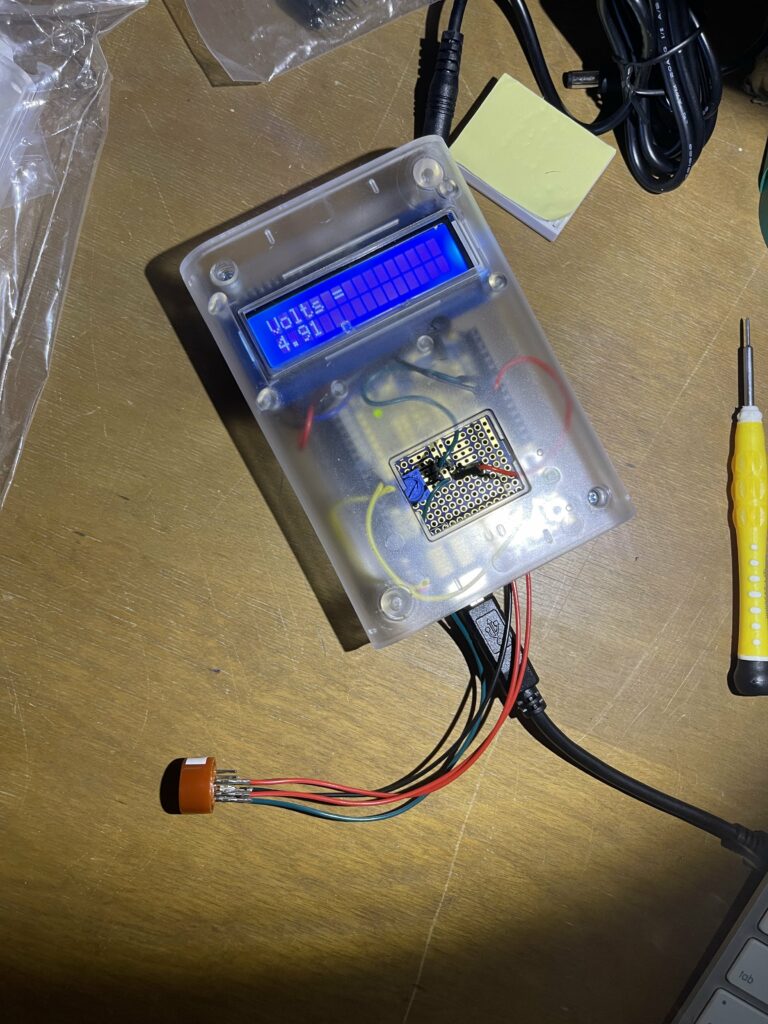
Image of Completed Sensor

Arduino MQ-3B Ethanol Sensor: Behavioral Neuroscience Research

Introduction Recently, I had the opportunity to collaborate with a university research lab to build some vapor sensors to roughly measure ethanol (EtOH) vapor within an operant chamber. This project was a lot of fun. With extremely limited circuit documentation on the web and never having personally used Arduino before, there were a lot of interesting hiccups I ran into. Overall, this project was a bit out of my wheelhouse, but with much determination, the finished product turned out rather nicely. ...

December 11, 2021 · 7 min · Robert D. White
Usability Graphic

Usability Evaluations: Findability

Abstract This review investigated findability and its relationship to usability and usability evaluations. Definitions of usability, findability, usability evaluations, and other sub-components of these terms including navigability are discussed, and the importance of research studies using similar terminologies is considered. A series of six usability evaluation studies is presented, and the terminologies presented in each are described. Goals, findings, and conclusions of each study are considered, and applications from the conclusions are drawn. This review concludes that clear definitions of these topics are crucial to successful implementation of various study methodologies and presentation of results. The review further concluded that, based on the available research, findability is a critical factor of usability that, when effectively present, leads to greater usability and overall user satisfaction of a product or website. ...

September 28, 2021 · 13 min · Robert D. White
Graphic of Interconnected Team

A Quick Note on Leading Geographically Dispersed Teams

The ability for geographically dispersed teams to interact, engage, and collaborate effectively is a concern for increasing numbers of corporations, teams, and leadership, especially in the post-COVID-19 era workplace. Adoption of technological solutions for computer-mediated communication can mitigate some of the inherent complexities and difficulties of the geographical dispersion problem, and research teams have increased efforts to both understand the problem and design groupware solutions to support virtual team collaboration (Morrison-Smith & Ruiz, 2020). Researchers suggest that, along with the physical demands of distance for virtual teams, leaders should consider cognitive, social and emotional concerns at the forefront of the discussion in order to best address the problems and create a positive collaborative environment (Morrison-Smith & Ruiz, 2020). ...

September 27, 2021 · 3 min · Robert D. White
Available as a Tor onion service